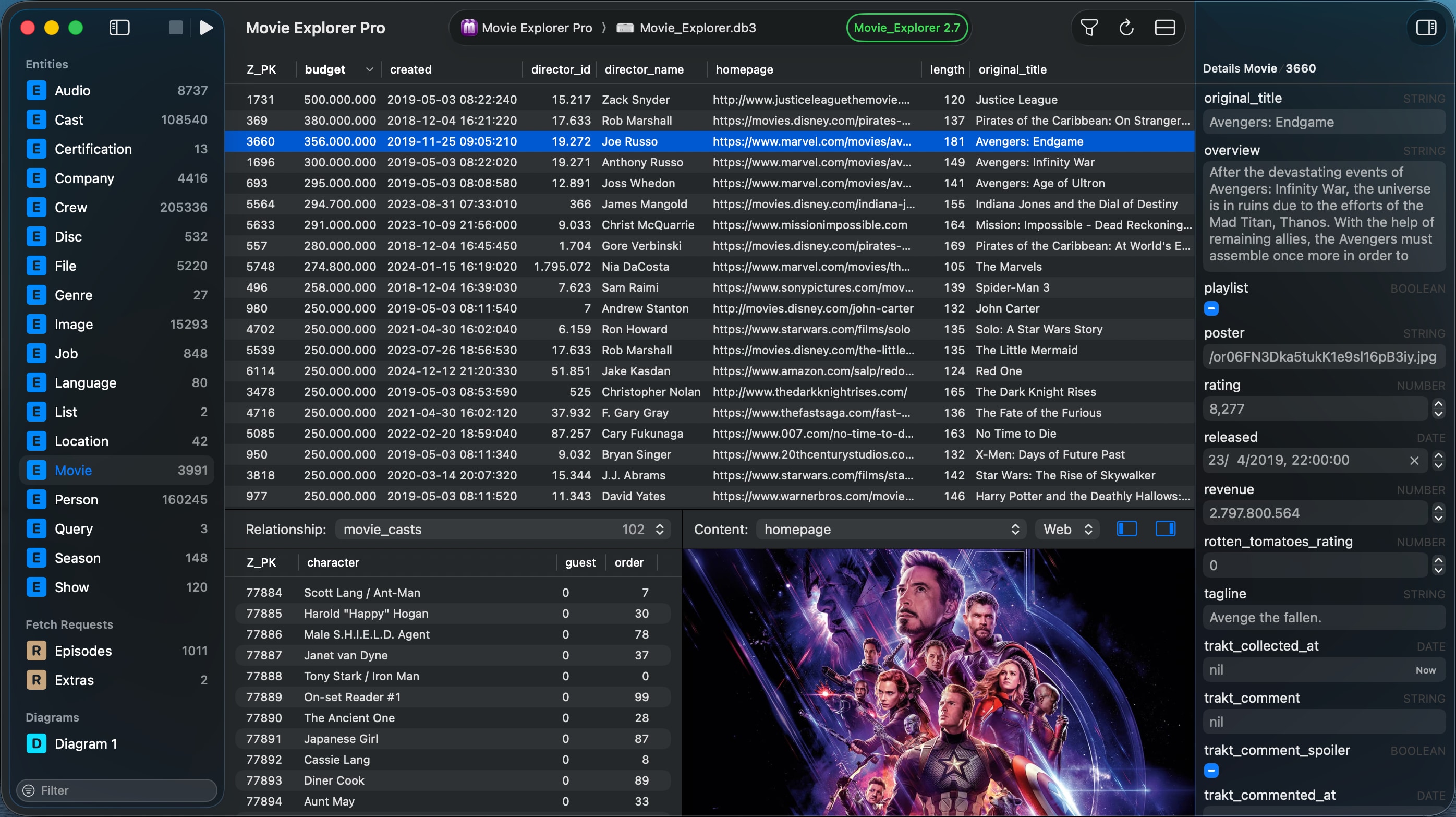
Core Data Lab offers everything to view and analyze the Core Data database of your app, like a predicate editor, data editor, data change tracker and a built-in web and image content viewer.

There is no need to learn anything new, thanks to its familiar interface design, native macOS interaction controls and a data presentation that strictly follows the Core Data object model design.

A Core Data Lab project contains all essential information of your app and database, so you can continue where you left off by simply opening your last project.

Core Data Lab lets you easily view, edit and analyze data of SQLite based Core Data and SwiftData apps. View, track and explore what’s inside your Core Data database, including all Core Data specific details like relationships, entity descriptions, fetch request templates, composite attributes and more.
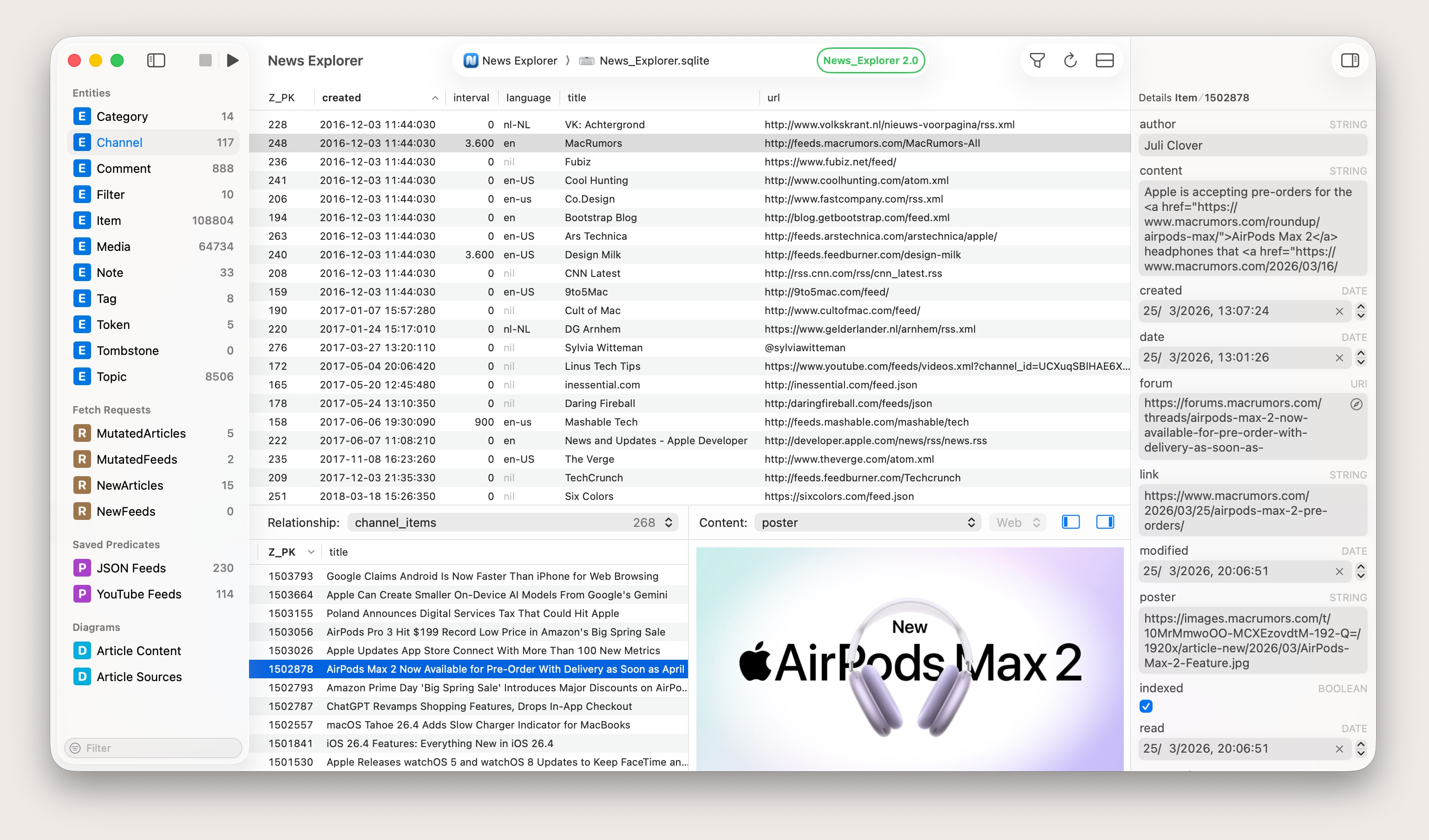

Hit the Play button on the toolbar to start tracking database changes. New, deleted and changed data rows are being displayed with distinct colors. Each previous row version is displayed individually, including all value changes. Works with macOS apps, and apps running in an iOS, iPadOS, visionOS, watchOS or tvOS simulator. There is no need to adjust your project or implement special libraries.
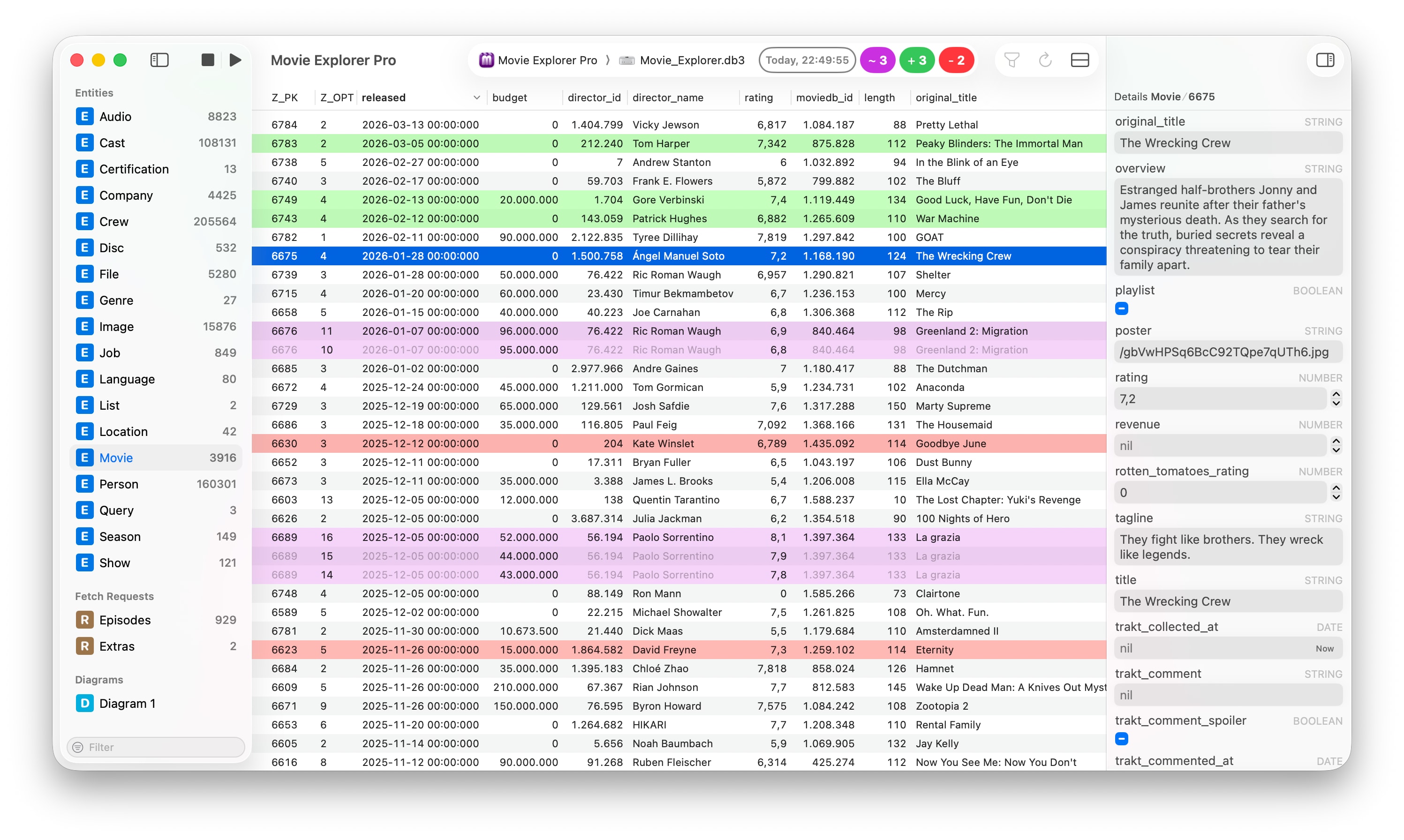

With the built-in predicate editor you can build all kinds of filters without entering any SQL phrases. Predicates can be saved within the project, including sorting and column settings, so you can easily re-use your filters.
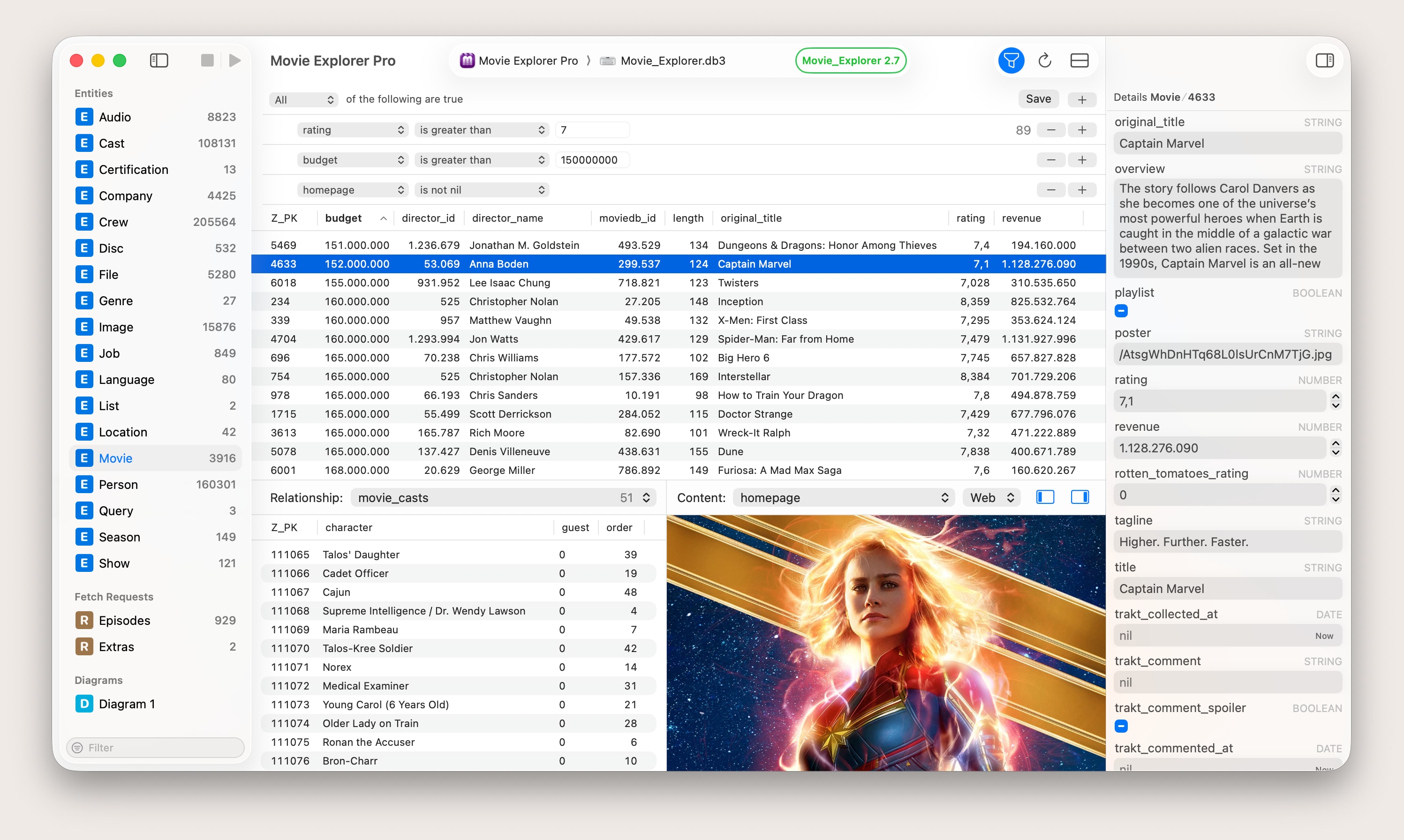

You can create, edit and delete data directly in Core Data Lab, validated by the Core Data object model. This makes it easy for example to repeat or reproduce test cases for your Core Data app. Data can be edited in the Details inspector panel, or in a separate window which includes an optional bottom panel to manage relationship data related to the opened object.
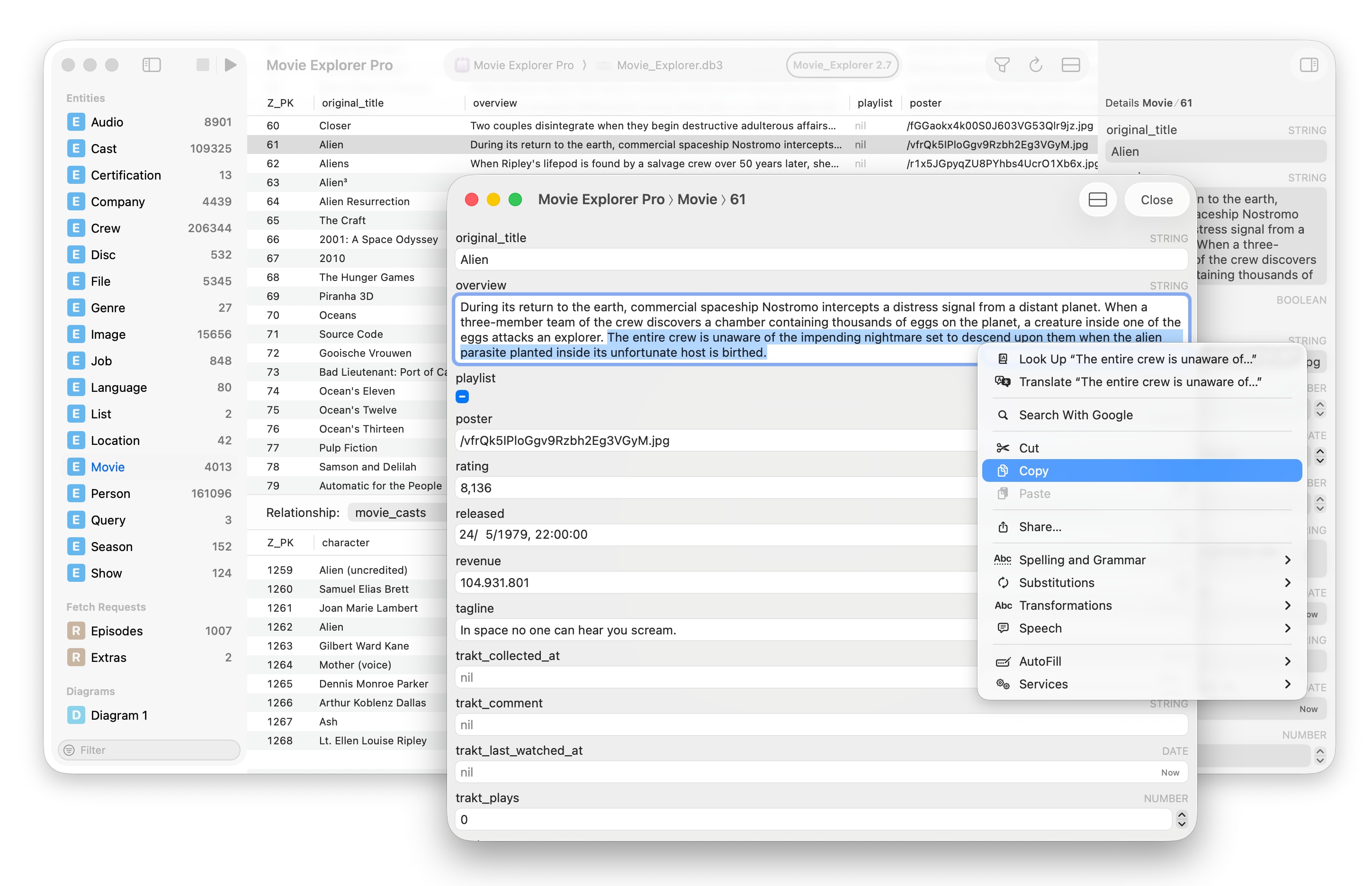

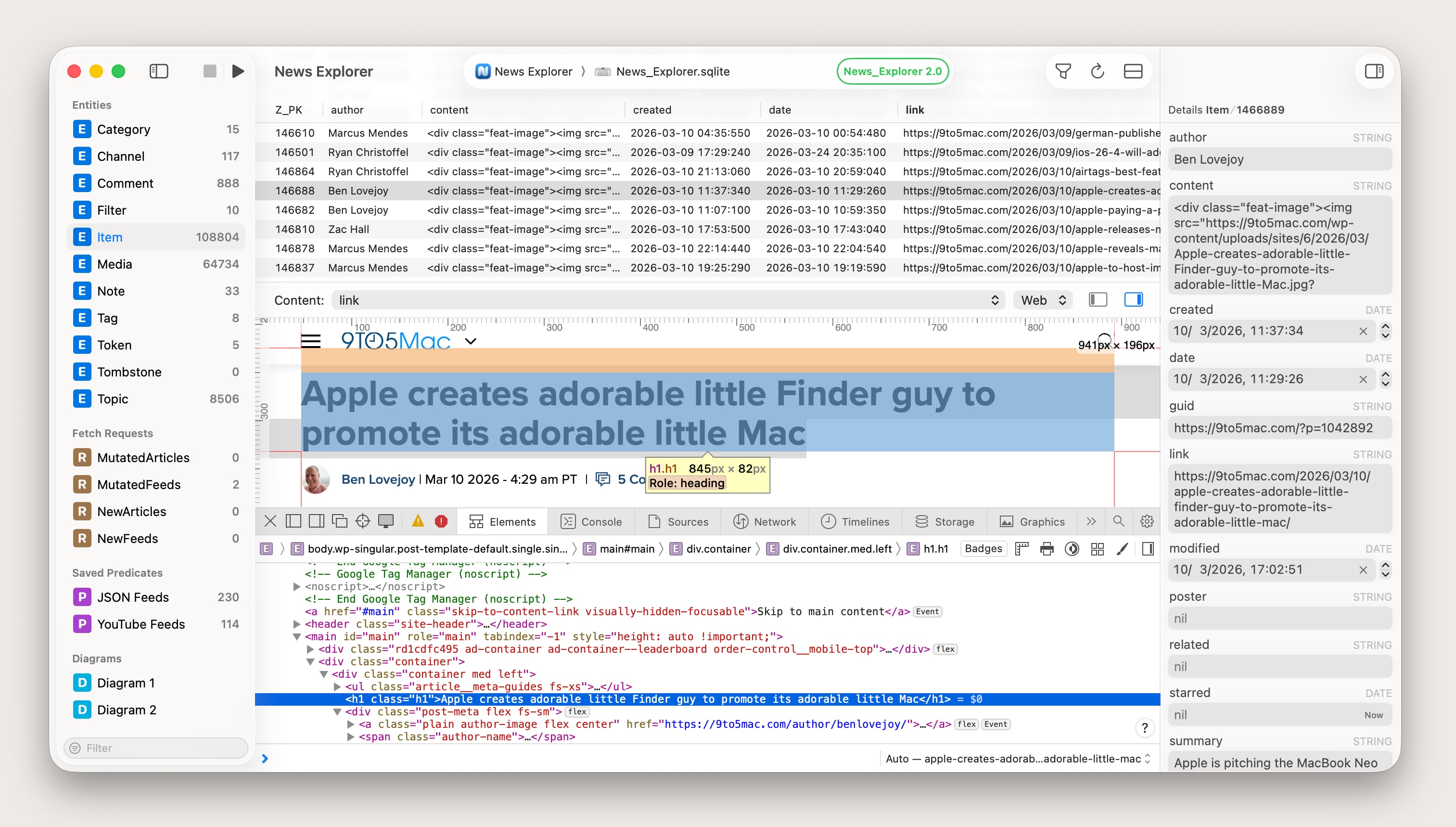
The field content viewer zooms in on one field and automatically detects HTML, XML, RTF, PLIST and JSON content, URL's linked to websites or images, but also binary images and other content saved in the database. Web content can also be debugged using the built-in web debugger.

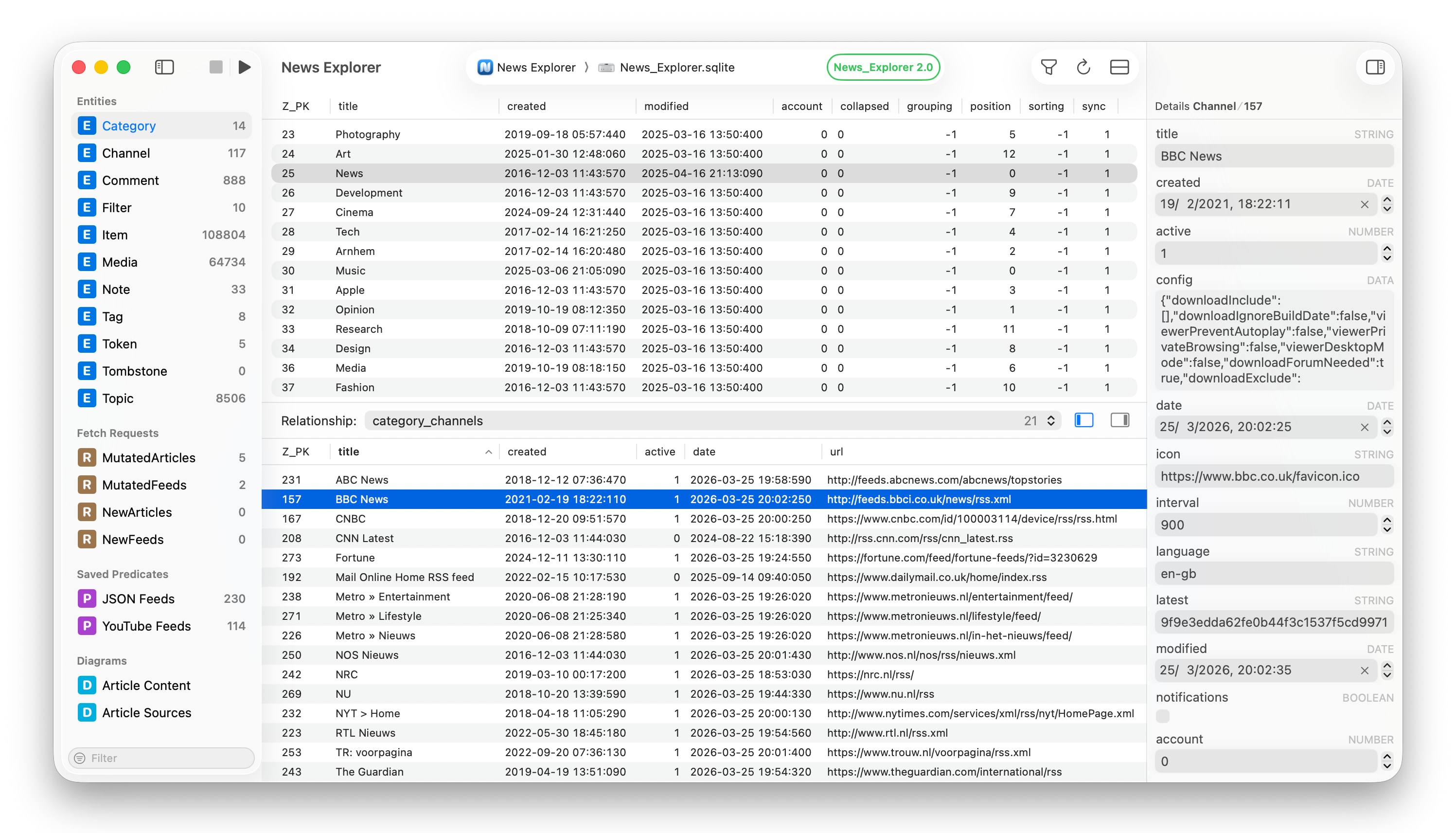
Get quick and easy access to all data related to a selected object. Selecting an object in the Relationships viewer shows all attribute values in the Inspector. If you want to compare the related data of multiple objects, just open them separately in detail windows by double-clicking the objects in the main document window.

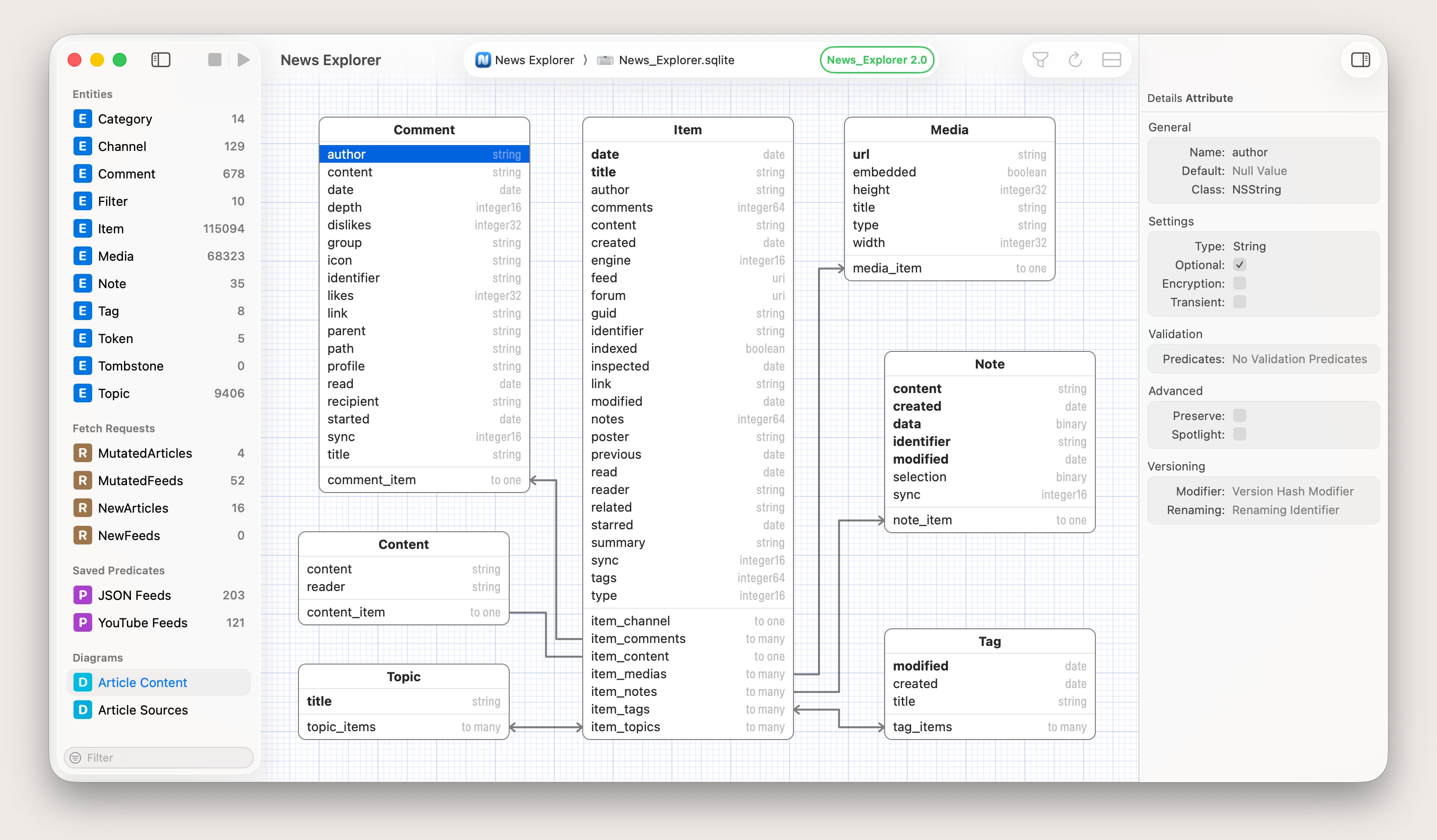
Visualize entities and relationships with diagrams. You can add multiple diagrams to a project, and it’s easy to center each diagram around a few entities by excluding unrelated entities. Diagrams can be exported as PDF, or copied to the clipboard so you can use them in other apps.

All Core Data apps ever launched in the iOS, iPadOS, tvOS or visionOS simulator can be added to a new Core Data Lab project with a single click, using the Simulator browser. This is just one of the many ways to set up a new project.
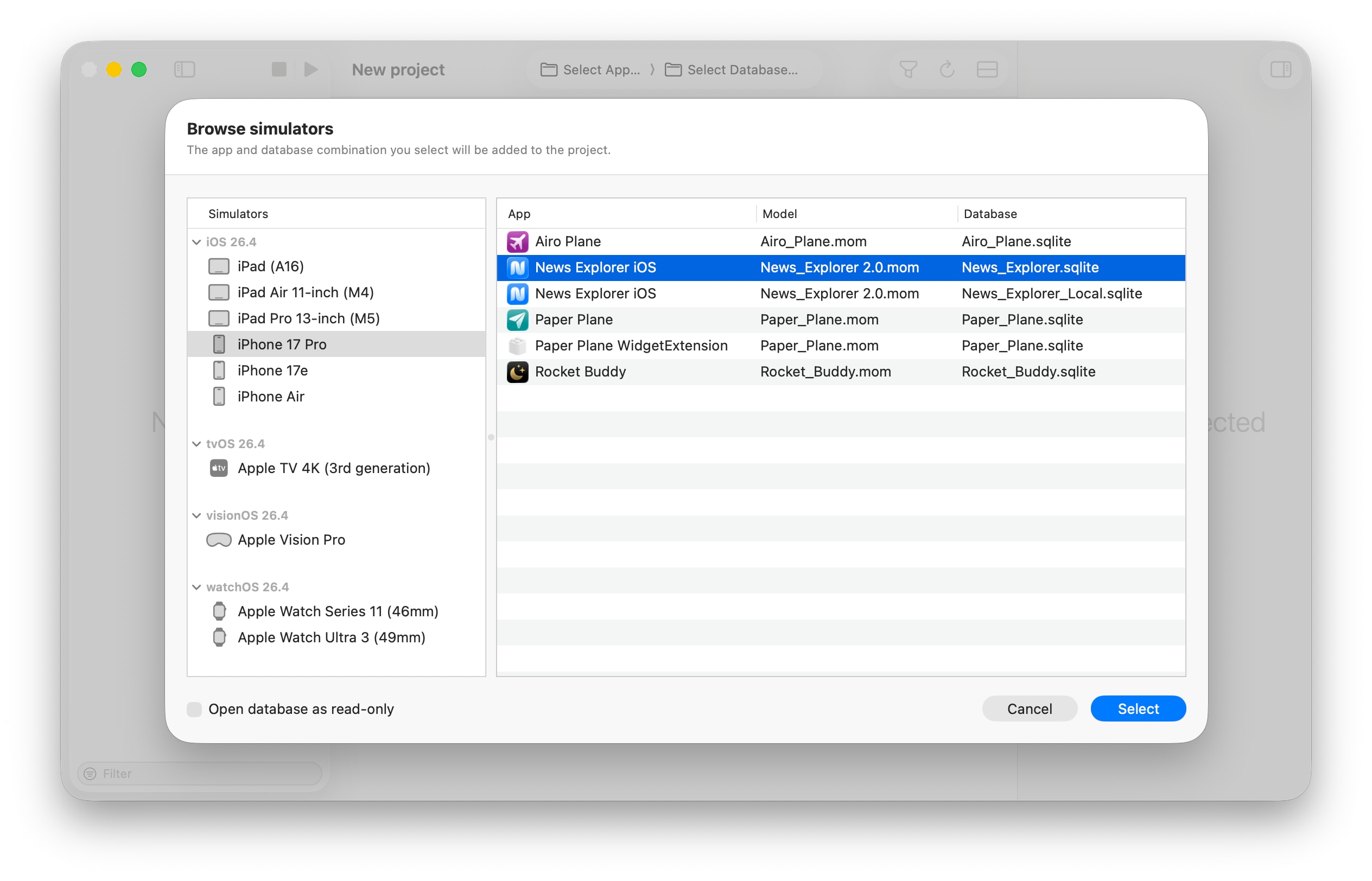

Set up a new project in a few easy steps. Select an app and let Core Data Lab search for matching database. Or select a database file and let Core Data Lab search for matching apps.

Open and view SQLite databases without selecting a Core Data object model. You can also open SQLite files directly in the Finder using Core Data Lab.

View instantly all relationships and related data of a selected row. Easily switch to another relationship. Selecting a row in the relationship panel will show the data in the detail panel.

View all details of all attributes of a selected Core Data entity in the sidebar. Inspect all other details like relationships, indexes and constraints.
You can both import and export data based on CSV and JSON. With JSON you can even export and import relationship and composite data. CSV files can be opened in Excel or Numbers.

Built on top of the latest Apple technologies, Core Data Lab integrates perfectly in your existing development environment, and runs natively on Intel and Apple Silicon Macs.

Start viewing, tracking, editing and analyzing the data of your Core Data apps in the most effective and convenient way possible.